


Hypertrophic Cardiomyopathy (HCM) in Cats: Signs, Treatment, Life Expectancy, and When It's Time

By Dr. Ray Spragley, DVM · Updated November 2026

Hypertrophic cardiomyopathy, or HCM, is the most common heart disease in cats. Many cats with HCM look completely healthy for years, and some never show a single sign. Others develop heart failure, blood clots or die suddenly. This guide explains what HCM in cats is, how it’s found, what a heart murmur does and doesn’t tell you, which treatments matter, why anesthesia needs extra care, and how to know when a cat with HCM is reaching the end.

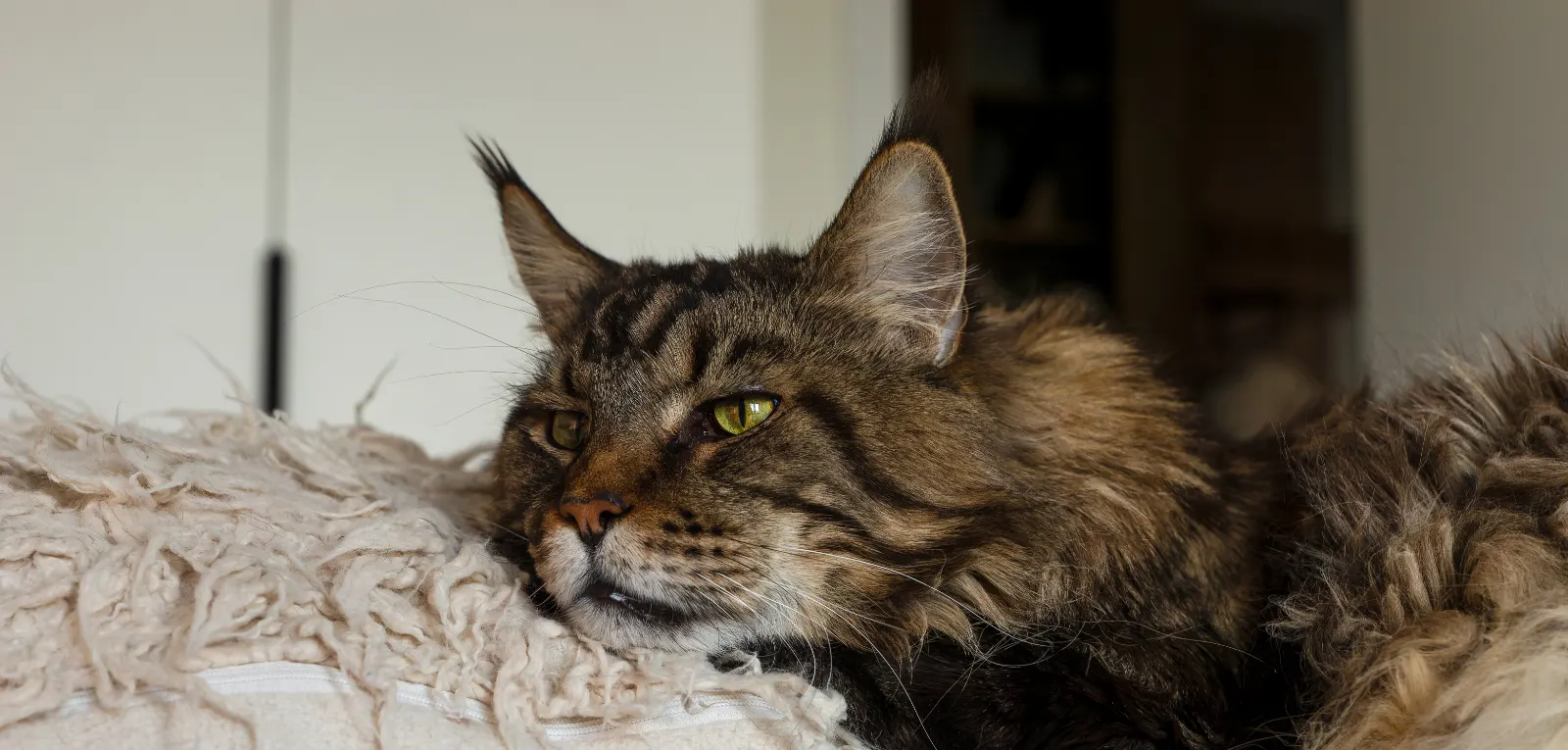
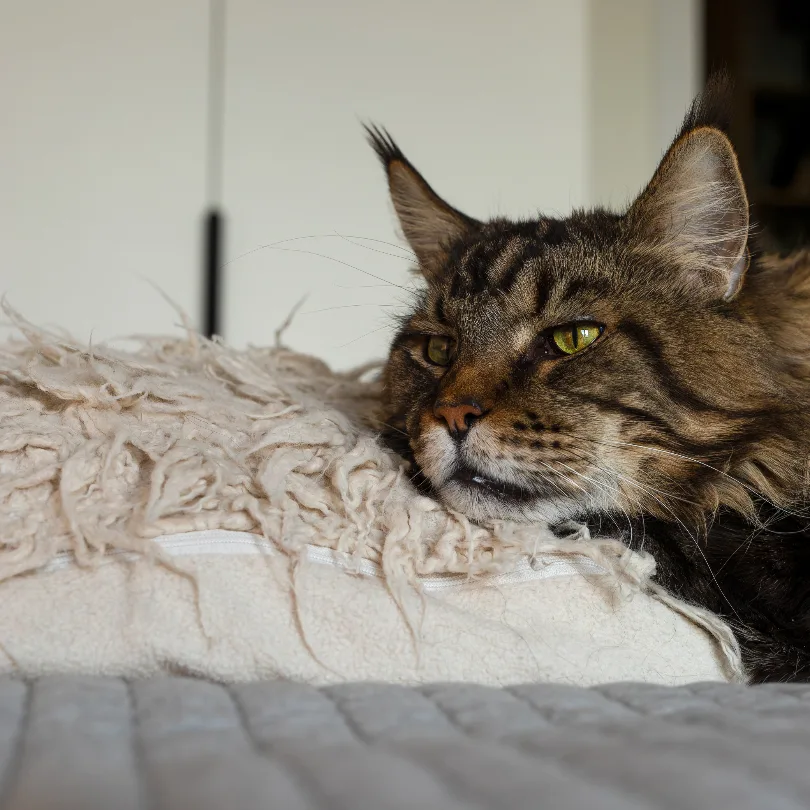
Maine Coon cat resting its head on a pillow at home

Hypertrophic cardiomyopathy, or HCM, is the most common heart disease in cats. Many cats with HCM look completely healthy for years, and some never show a single sign. Others develop heart failure, blood clots or die suddenly. This guide explains what HCM in cats is, how it’s found, what a heart murmur does and doesn’t tell you, which treatments matter, why anesthesia needs extra care, and how to know when a cat with HCM is reaching the end.

What Is Hypertrophic Cardiomyopathy in Cats?

With HCM, the muscular wall of the heart’s main pumping chamber slowly thickens. We like owners to picture the heart muscle thickening over time. As it gets thicker, the chamber inside gets smaller and stiffer, and the heart gradually can’t relax, fill and contract the way it should.

Blood starts to back up into the left atrium, the chamber above it, which stretches and enlarges. That enlarged atrium is what sets the stage for the two biggest dangers of HCM: congestive heart failure and blood clots.

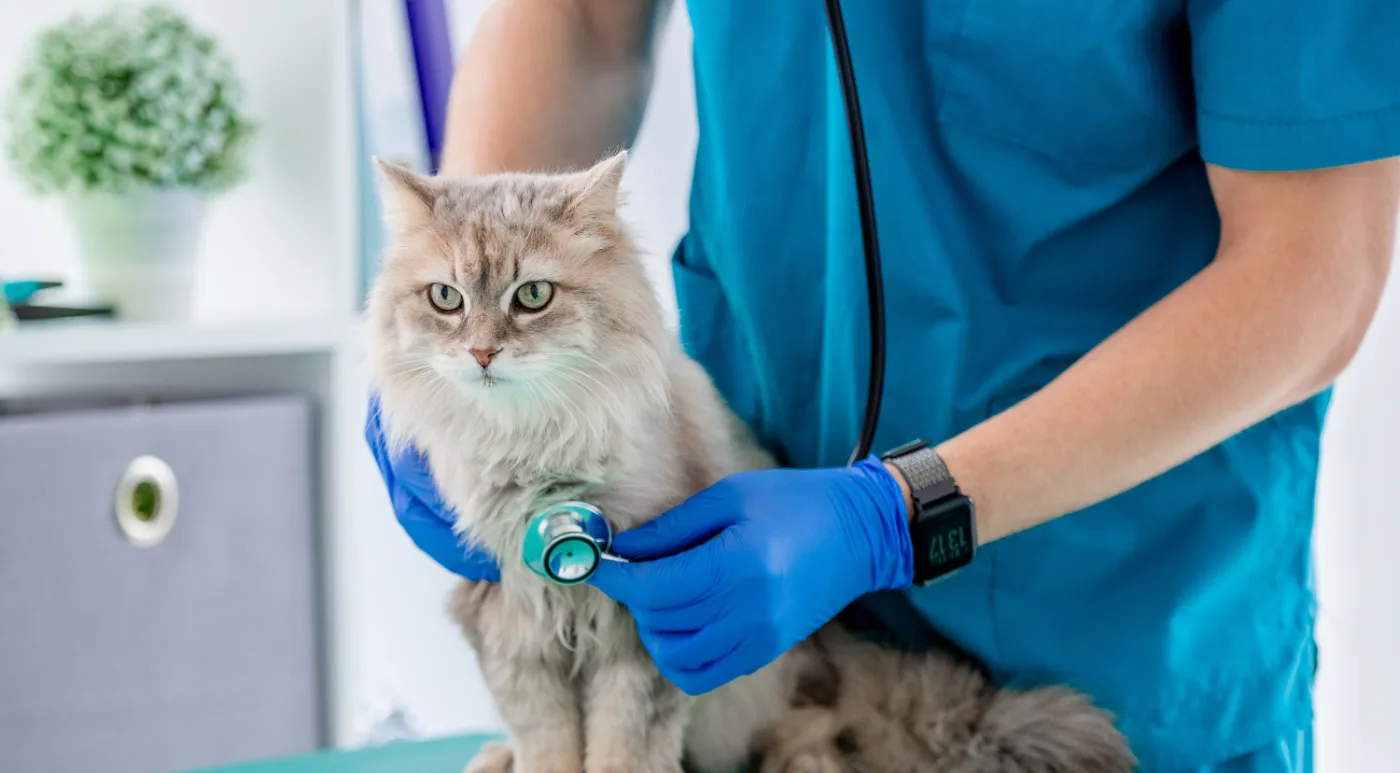
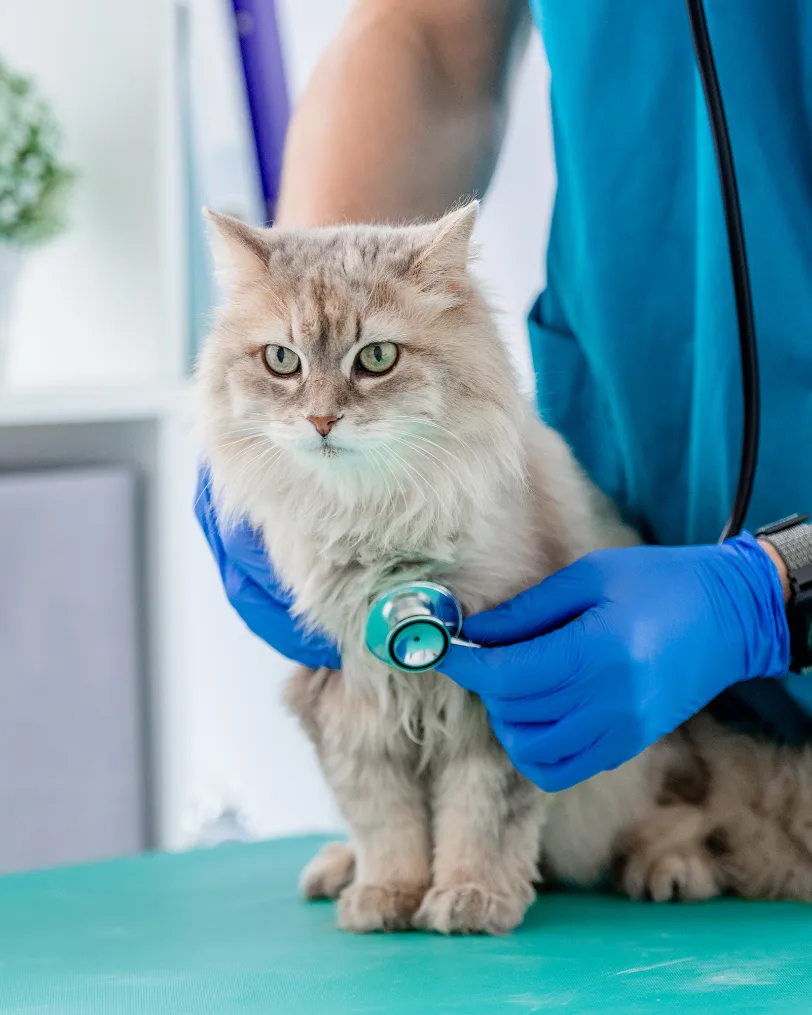
Veterinarian listening to a cat's heart with a stethoscope

Which Cats Get HCM?

HCM can affect any cat, including mixed breed cats, and it’s most often diagnosed in middle aged cats. Males are affected more often than females. Some breeds are at much higher risk. The Cornell Feline Health Center lists Maine Coons, Ragdolls, British Shorthairs, Sphynx and several other breeds as more likely to develop it.

In Maine Coons and Ragdolls, researchers have found specific gene mutations linked to HCM. According to the UC Davis Veterinary Genetics Laboratory, Maine Coons with two copies of the mutation can develop moderate to severe disease and die suddenly by age 4 or younger. A DNA test can tell you whether a Maine Coon or Ragdoll carries the mutation, but a negative test doesn’t rule out HCM.

Some heart thickening isn’t true HCM. Hyperthyroidism and high blood pressure can both thicken the heart muscle, and treating them can help the heart improve, so your vet will usually check for both.

Heart Murmurs in Cats: How HCM Is Often Found

HCM is often first suspected when a vet hears a heart murmur or an irregular gallop rhythm at a routine visit. A murmur is the sound of turbulent blood flow inside the heart. But many cats with HCM have no murmur at all and stay subclinical, meaning they show no signs, for their entire life.

It’s important to know that the murmur itself doesn’t tell you how severe the heart disease is. A loud murmur can come from a mild problem, and a cat with severe HCM can have a quiet murmur or none. Some murmurs in cats come from harmless changes in blood flow and aren’t heart disease at all. A murmur is a reason to look further, not a diagnosis.

Diagnosing HCM: proBNP and the Echocardiogram

  • NT-proBNP blood test. proBNP is a hormone released when the heart muscle is stretched or stressed. It’s a screening test. There are rapid in-house tests that give an answer in about 10 minutes, and the number can be quantified when blood is sent to an outside lab. A high result suggests heart disease is likely, but it doesn’t tell you what kind or how severe.
  • Echocardiogram. A heart ultrasound is the definitive test. It measures how thick the walls are, how large the left atrium has become, and whether there are signs of a clot forming. It tells you the degree of heart disease.
  • Chest x-rays if a cat is breathing hard, to look for fluid in or around the lungs
  • Blood pressure and a thyroid test to rule out other causes of a thickened heart

After an echocardiogram, cats are usually staged using the ACVIM consensus guidelines. Stage B1 cats have heart changes but a low risk of complications. Stage B2 cats have a significantly enlarged left atrium and a higher risk of heart failure and blood clots. Stage C cats are in heart failure or have had a clot, and stage D cats are in heart failure that no longer responds well to treatment.

Treatment for HCM in Cats

There’s no medication that reverses the thickening of HCM. Treatment is about lowering the risk of complications and managing heart failure once it happens. Almost all heart medications are started once a cat enters heart failure. The main exception is clopidogrel (Plavix).

  • Clopidogrel (Plavix). If an echocardiogram shows stage B2 disease, Plavix can greatly lower the risk of blood clots. It’s usually given once a day for life.
  • Furosemide (Lasix). A diuretic that removes fluid from the lungs once a cat is in heart failure
  • Pimobendan. Sometimes added for cats in heart failure
  • Atenolol. A heart rate medication sometimes used in specific situations. It hasn’t been shown to help most cats live longer, so your vet or a cardiologist will decide whether it fits your cat.

Cats in heart failure need regular rechecks and medication adjustments. Our guide to congestive heart failure in cats covers that stage in detail.

HCM and Blood Clots (Saddle Thrombus)

Blood that moves slowly through an enlarged left atrium can form a clot. If that clot breaks loose, it often lodges where the main artery splits to the back legs. This is called a saddle thrombus, or arterial thromboembolism, and it’s one of the most serious complications of HCM. Owners should be aware of what it means for a cat to throw a clot. It’s extremely painful, it usually comes on without warning, and many cats don’t survive it.

The classic sign is a cat that suddenly cries out and can’t use one or both back legs, often with cold back paws. This is an emergency. Our guide to saddle thrombus in cats explains the signs, treatment and outlook so you know what to expect if it happens.

Anesthesia, Stress and Sudden Death

Anesthesia is risky for a cat with HCM. Sedatives and IV fluids put extra strain on a stiff heart and can push a cat into heart failure. If a cat with HCM, or a cat with a newly found murmur, needs to go under for surgery or a dental, an echocardiogram should be performed beforehand, and possibly a cardiology consult to be safe. That lets your vet plan the safest anesthesia and fluid choices.

Sudden death with no warning is possible, either from HCM itself, usually from an abnormal heart rhythm, or from a saddle thrombus. That’s hard to hear, but it’s one reason staging with an echocardiogram matters. Knowing a cat’s risk helps you and your vet decide on Plavix, plan around stress and anesthesia, and know what to watch for.

Signs of Heart Failure in a Cat With HCM

Cats hide illness well, and heart failure in cats often seems to appear overnight. Watch for:

  • Fast breathing at rest or while sleeping. A resting breathing rate consistently over 30 breaths per minute is worth a call to your vet
  • Belly moving with each breath or breathing with effort
  • Open mouth breathing, which is always an emergency in a cat
  • Hiding, lethargy or a poor appetite
  • Sudden back leg weakness or paralysis from a blood clot

Heart failure in cats can mean fluid in the lungs, called pulmonary edema, or fluid around the lungs, called pleural effusion. Both make breathing harder and need treatment right away.

Counting your cat’s breaths while asleep is one of the most useful things you can do at home. A rising sleeping breathing rate is often the first sign of trouble.

Life Expectancy for Cats With HCM

HCM life expectancy varies enormously. Many cats with mild, stage B1 disease live a normal lifespan and never develop problems. Cats with an enlarged left atrium are at higher risk. Once a cat develops heart failure or a blood clot, time is usually measured in months to a year or two, depending on how well the cat responds to treatment.

Regular echocardiograms help track whether the disease is progressing, so you and your vet can adjust the plan before a crisis.

When to Consider Euthanasia for a Cat With HCM

The hardest stage of HCM is when heart failure stops responding to medication. Signs that a cat with HCM may be near the end include:

  • Weight loss and muscle loss despite eating, or a poor appetite
  • Open mouth breathing
  • Loss of personality, hiding and no longer seeking out the family
  • Severe pulmonary edema, especially fluid that keeps coming back despite higher doses of diuretics
  • A saddle thrombus, or a second clot after recovering from a first

A quality of life scale can help you track the good and bad days. Our guides to signs a cat is dying and how to know when it’s time can help you think it through, and our guide to in-home cat euthanasia explains how a home visit works.

Frequently Asked Questions

What is hypertrophic cardiomyopathy in cats?

It’s a disease where the wall of the heart’s main pumping chamber thickens over time, so the heart can’t relax, fill and contract the way it should. It’s the most common heart disease in cats.

Does a heart murmur mean my cat has HCM?

Not necessarily. A murmur is a reason to look further, but it doesn’t tell you how severe the heart disease is. Many cats with HCM have no murmur, and some murmurs aren’t heart disease at all. An echocardiogram gives the definitive answer.

What is the proBNP test for cats?

It’s a blood test for a hormone released when the heart is stretched. It’s a screening test. Rapid in-house versions give an answer in about 10 minutes, and a lab can measure the exact number.

Is HCM in cats treatable?

The thickening can’t be reversed, but treatment lowers the risk of complications. Plavix can greatly lower the risk of blood clots in stage B2 cats, and diuretics like Lasix manage heart failure.

Can a cat with HCM go under anesthesia?

It’s riskier. An echocardiogram should be performed beforehand, and possibly a cardiology consult, so the anesthesia can be planned safely.

How long can a cat live with hypertrophic cardiomyopathy?

Many cats with mild HCM live a normal lifespan. Once heart failure or a blood clot develops, time is usually months to a year or two.

Are Maine Coons prone to HCM?

Yes. Maine Coons and Ragdolls have known gene mutations linked to HCM, and a DNA test can check for them.

When should you put a cat down with HCM?

When heart failure stops responding to treatment and a cat has weight loss, open mouth breathing, loss of personality or severe fluid in the lungs.

Caring for a Cat With HCM

HCM is often a silent disease, and many cats live long, happy lives with it. An echocardiogram tells you where your cat stands, Plavix can protect higher risk cats from clots, and counting sleeping breaths at home helps you catch heart failure early. When the heart can no longer keep up and the time comes to say goodbye, we provide gentle, in-home euthanasia throughout New York City and Westchester County, so your cat can be at peace in the place they know best.

This article is general information and is not a substitute for an exam by your own veterinarian.

Dr. Ray Spragley, DVM

About the author

Dr. Ray Spragley, DVM

Dr. Ray is the veterinarian and owner of Zen Dog Veterinary Care. He earned his veterinary degree from Ross University School of Veterinary Medicine, completed his clinical training at The Ohio State University, and has been in practice for more than a decade. His work today is devoted to in-home euthanasia and quality of life consultations for dogs and cats in New York City and Westchester County.


Meet Dr. Ray

Featured Posts